Welcome to the Real Deal Nurse Practitioner Club, the podcast for nurses who are ready to pass their boards and thrive in their careers as real deal nurse practitioners. I’m Anna and I’m the Director of Nursing Content at Blueprint Test Prep. Whether you’re deep in exam prep or stepping into practice, I’ve got you. It is time to become the confident, knowledgeable NP that you’re meant to be. Let’s dive in.
Hey everyone, welcome back to another episode of the Real Deal Nurse Practitioner Club. I’m Anna and I’ve got Courtney here with me today.
Courtney: Hi everyone, Courtney here. So excited to be here. And today’s episode is a little bit different than our usual topics. And honestly, it’s one I really wish I had when I was getting ready to step into the world as a real deal NP.
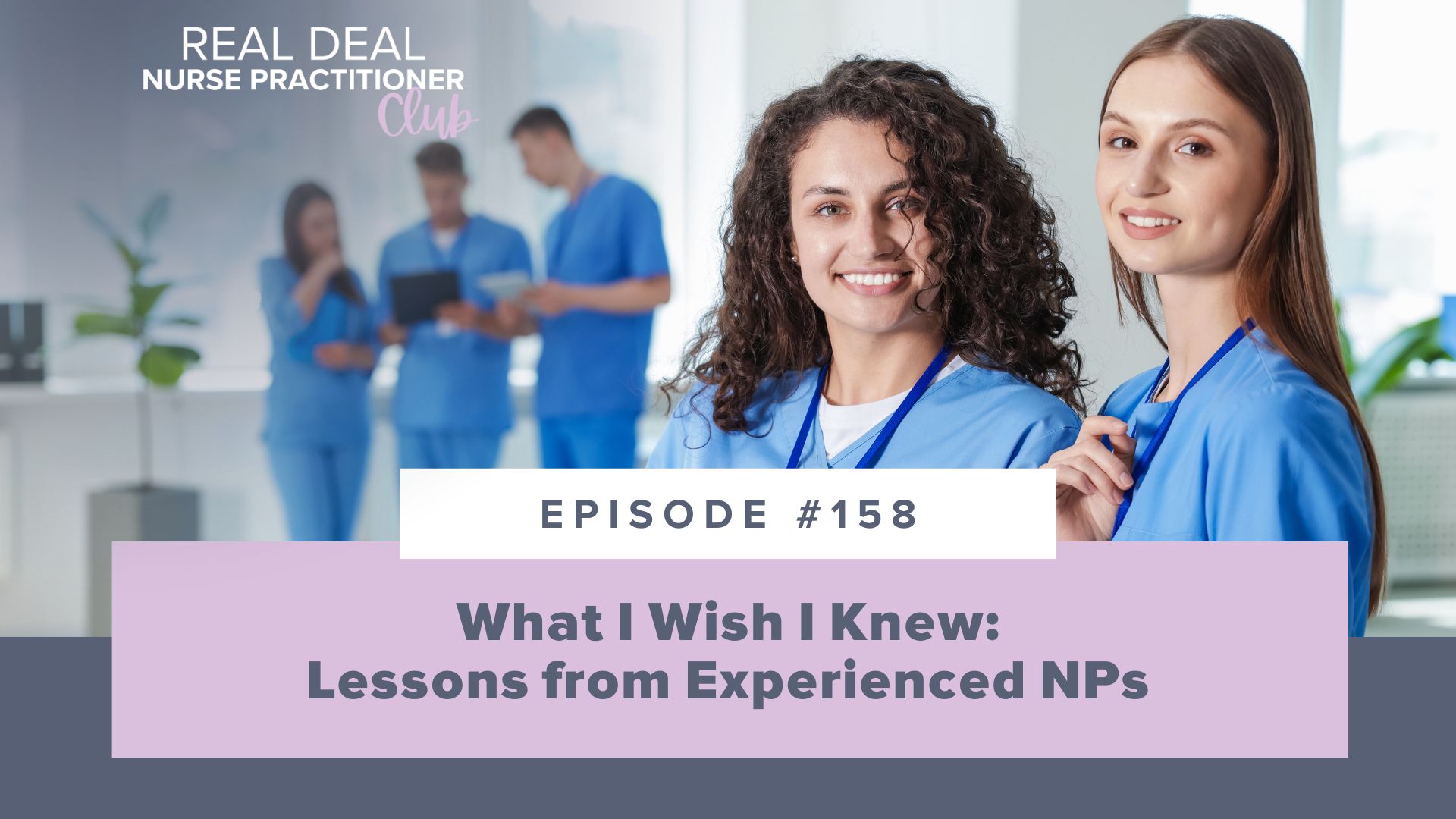
Anna: Yeah, so whether you are still deep in board prep or you’re about to sign that first offer letter, there are things that you’re going to learn that just are not in the textbooks. And they definitely aren’t in those thousands of practice questions that you’ve been doing. And so this episode is about the real life lessons from experienced NPs.
You know, it’s the stuff that you end up hearing in the hallway after class from a coworker between patients or in your DMs when someone finally asks, okay, but what is this actually like? So we’re going to walk through a few themes today.
We’re going to talk about what we wish we knew about boards versus real practice, because we know they are different. We’re going to talk about imposter syndrome and confidence. We’re going to talk about what we wish we knew about boundaries and burnout before starting and really what I wish I knew about jobs and money and advocating for myself.
But let’s jump in, and we’re going to start with the question that comes up in a lot of our live sessions within our live study group. And that really is, is practice anything like this exam?
Courtney: Love this question, and the honest answer here is yes and no. If there’s one thing I wish I understood earlier is that boards are truly a safety check, not a “you must know everything about this forever” exam. So boards are testing things like can you recognize red flags? Can you choose a first line treatment? Can you identify what you should absolutely not miss or send home? But then you step into real practice and suddenly you’re like, wait, I have guidelines, I have the EMR, I have my colleagues, I can consult specialists, and then it truly becomes a true team sport.
Anna: Yeah, I remember feeling at the beginning like if I didn’t know an answer instantly in my head, it meant like I wasn’t smart enough. But to be honest, the safest clinicians I know look things up all the time, right? They double check dosing. They confirm guidelines. They make sure they’re doing the best thing for the patient. Remember, that doesn’t make you weak. It doesn’t make you not smart. It actually just makes you careful and safe.
Okay, next, let’s talk about how normal it is to not know everything and to be able to say that out loud without spiraling.
Courtney: Oh yes. So when I first started, every patient question felt like a pop quiz, and I was like sweating and I would get tremendous anxiety. And if I had to look something up, my brain was screaming at me like they are going to figure out you’re new and think you have absolutely no idea what you’re doing.
Anna: Yeah, that internal panic is so real. It’s one thing when you’re a student and they know you’re a student. They’re expecting you to not know everything. But you just put this immense pressure on yourself as a new NP when it’s you in that clinician seat.
Courtney: For sure. So here’s what I learned. So patients actually trust you more when you’re transparent and thorough. And I started saying things like, “Hey, you know what? That’s a great question. I want to double check the most up-to-date guidelines so I can give you the very best answer.” So let me pull that up real quick and look over that.
You know, I’d step out, I’d look it up, I’d message a colleague or my supervising physician if I had to. And then I’d come back with a clear plan. And then you could literally feel the tension drop in the room because the patient saw that I cared enough to get it right.
Anna: Yes. If you are new, like, this is your permission slip. Use your resources. Ask these questions. Do not confuse learning with not being enough. Like, you are not a walking textbook. You should not be a walking textbook. You are a clinician, and clinicians are allowed to think.
All right. Now, I also want to talk about imposter syndrome because I don’t know a single new NP who hasn’t felt it. Like if I could go back and talk to brand new NP Anna, I would tell her this. Feeling like an imposter or feeling like I shouldn’t be here, it doesn’t mean that I’m not ready. It just meant that I cared.
Courtney: Yeah, absolutely. And if you’re listening and thinking, what if I miss something? Or what if I’m going to accidentally hurt someone? That’s a very human, very normal reaction. The shift I had to make was going from I must be perfect at all times to I must be systematic and safe. Because instead of trying to memorize every nitty gritty little thing, I focused on having solid foundations. You know, a solid assessment process, a solid HPI, knowing those biggie red flags, and then knowing when to ask for help.
And clinically, that might look like asking just that one more follow up question, doing that extra neuro check, saying, hey, you know what, I’d like to see you back in 48 hours so you can monitor the patient closely. Or, you know, sending a patient to the emergency department because your gut is saying something isn’t right.
Anna: Yeah, absolutely. Like, doing those types of things are not weakness, they’re not you not being enough. They’re just you using your judgment. It’s you becoming a safe provider.
All right, and this next one is huge, and it’s something almost no one warns you about enough. But I know we’ve talked about on this podcast because I am so passionate about this, and that is burnout and boundaries and being a real human and having some self-compassion first.
Courtney: Honestly, this was the absolute hardest lesson for me as a new NP. I wish I knew earlier that I didn’t have to be an automatic yes to everything. You know, those yesses, you know, yes to double booking, yes to squeezing in just one more patient at 4:55 p.m. And then you’re wondering why you’re absolutely exhausted and charting for the rest of eternity.
So while not every day is going to flow smoothly, it’s inevitable that work won’t always stay at work. It’s really important to prioritize that work-life balance from the very beginning. Block realistic time for lunch or for breaks, and if your clinic offers dedicated admin time, make sure you use that to catch up on your paperwork and what not.
Anna: Yeah, and if you’ve made it through NP school, if you’re listening to this podcast in your free time, chances are you’re a high achiever, right? Like, you care deeply. You are using all of your resources. Like you are used to pushing through. But those traits can really burn you out fast if you don’t protect yourself. And I want to say this very, very clearly.
You are allowed to be a human with needs. Like you are not only a clinician with productivity goals. So don’t forget about all the things we talk about constantly with our patients: sleep, hydration, a balanced diet, exercise. Like clinicians who take better care of themselves provide better care, period. There’s like no if, ands or buts about it.
And I want to talk about advocating for yourself because nobody is going to protect yourself and nobody is going to protect your career like you will.
Courtney: Yes. When I took my first job, I was just so happy to be hired. I didn’t really ask any questions. I didn’t ask how long orientation would be, what the expectations were for patient volume. I didn’t ask about the support or whether, you know, mentorship was actually built into the culture there. I didn’t really negotiate salary or even ask about CME. I was just like, yes, please, thank you. I will take it. Luckily, my first job was in a super supportive environment, but me not doing my due diligence could have gone awry very, very quickly.
Anna: Yeah, and I’ve heard that time and time again about people not doing that due diligence, not asking those questions. And sometimes it works out, but a lot of times it doesn’t. So I always tell new NPs, ask for clear expectations. Ask what orientation really looks like. Ask who you can go to during your shift when you need backup. And don’t be afraid to negotiate, right? Things like salary, your sign-on, your CME money, conference days, your schedule.
You can ask, right? The worst thing they can say is no. And remember, your skills have value. Your license, it carries a lot of responsibility, and it’s okay to advocate for a setup that lets you be safe and ultimately sustainable long term. All right, now let’s talk about something not glamorous, but very, very real, and that is documentation.
Courtney: Yes, I wish I knew how much of my first year’s stress was going to come from charting, not from rare diagnoses, but truly just trying to document everything perfectly and falling behind.
Anna: Yeah, we have collected all sorts of good guidance here because this is like a universal challenge for not only new NPs, but really just clinicians in general. So some of our tips include creating templates or smart phrases for common visits like med refills, charting in real time as much as possible, instead of telling yourself that you’d remember all the details later because, newsflash, you probably won’t.
Also, you want to learn what actually needs to be in the note for billing and like legal safety. And honestly, one of the best things you can do is just ask an experienced coworker like, hey, can I see how you structured your note for this type of visit? Because you’re going to learn so much just from seeing a format that works. And your notes, they might be really wordy at first, and that’s normal, that’s expected, but you’re going to get faster and more confident over time.
All right, let’s shift gears to another lesson that we all wish we knew. And that’s you don’t have to do this alone. You need to find your people.
Courtney: Yes, this is so, so important. And you know, that can look like a lot of different things. So that might be a more experienced NP at your clinic or a physician in your group that loves teaching or a pharmacist you can trust to talk about medications with or a solid, trustworthy community online. But you know, a quick caveat, of course, be cautious about taking advice from random sources on social media. Look for clinicians who cite guidelines, admit when they don’t know, and those that prioritize safety, not just hacks and shortcuts.
Anna: Yeah, and in your clinical setting, it is truly okay to say, hey, I’m new, can I run something by you? Or hey, you know, I’m second guessing myself. Can I run something by you? Even when you’re not new.
Most people who remember what that first year felt like are going to be very, very generous. Remember, like you are not done just because you’ve graduated and you’ve passed your exam. This is just the beginning. And it doesn’t mean that you’re unqualified. It means that your exam is really just a license to keep learning. Right? Nursing is a lifelong learning journey, and every patient, every shift, every case becomes a part of your continuing education.
All right, let’s recap our biggest takeaways here. Not knowing everything is normal. Please remember that. Safe NPs are going to ask questions. They are going to look things up. And these feelings, this imposter syndrome, it doesn’t mean that you’re not ready. It means that you care. And just take that and channel it into safe systems.
And then, of course, boundaries are necessary. Advocate for yourself in your contracts, in your negotiation, in your workload. And you are allowed to grow. It is going to feel like a lot of growth over that first year.
Courtney: Yeah, absolutely. And if you’re feeling overwhelmed by school, by boards, or the idea of actually practicing as an NP, you are not behind. You are exactly where thousands of other NPs have been, and they made it through and you will too. And if you want structure around that growth from board prep all the way into early practice, our courses and our communities are designed exactly for that. We cover content, but we also talk about mindset, confidence, the “no one told me this” parts of being an NP. You do not have to figure this out alone.
Anna: Yeah, never ever feel like you are alone in this. But thanks for tuning into this quick episode. If this helped you, send it to a classmate or to that friend who just passed and is quietly freaking out about their first job.
And we have more episodes coming on clinical pearls and board prep strategy and real world practice tips. So make sure you’re subscribed. I think next episode we’re talking about that first year again and transitioning from student to real deal NP. But remember, you’ve got this. You are learning, you are growing, and someday you’re going to have your own list of, hey, this is what I wish I knew to share with that next generation. See you next time.
Thanks for listening to another episode of the Real Deal Nurse Practitioner Club. If you want more information about the different types of support that we offer to students and new nurse practitioners, you can visit npreviews, with an S, dot com. We’ll see you next week.